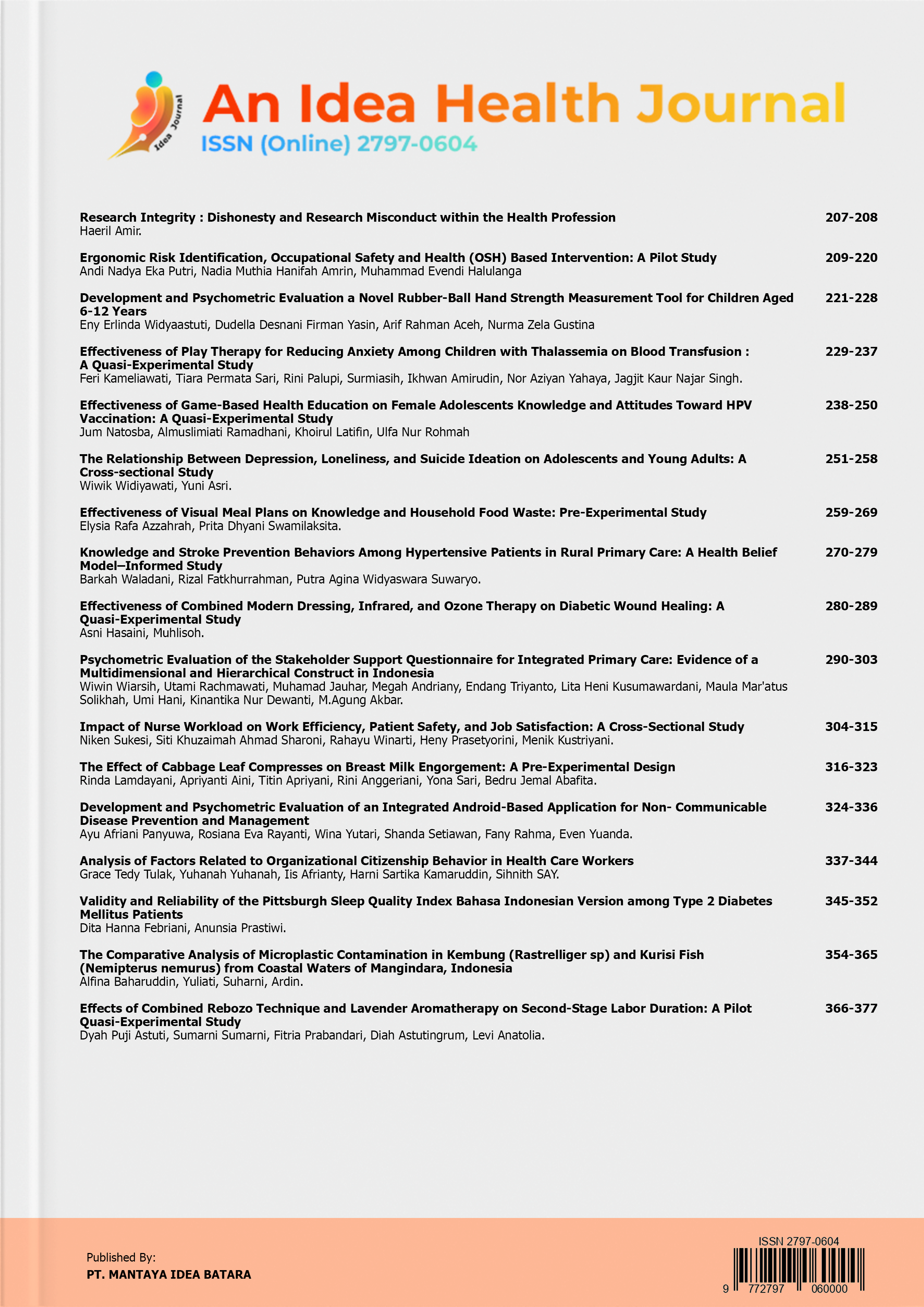
Knowledge and Stroke Prevention Behaviors Among Hypertensive Patients in Rural Primary Care: A Health Belief Model–Informed Study
DOI:
https://doi.org/10.53690/ihj.v6i02.666Keywords:
Hypertension, Health Belief Model, KnowledgeAbstract
Background: Stroke continues to be a leading cause of mortality and long- term disability, especially in low- and middle-income countries where hypertension is both highly prevalent and frequently inadequately managed. Behavioral modification is essential for reducing stroke risk; however, the association between knowledge and preventive practices in rural primary care settings has not been sufficiently examined within a theoretical framework. This study analyzed the relationship between knowledge of stroke risk factors and stroke prevention behaviors among hypertensive patients at a rural Indonesian primary healthcare center, utilizing the Health Belief Model.
Methods: A community-based cross-sectional study was conducted with 120 hypertensive patients participating in a chronic disease management program. Knowledge and preventive behaviors were measured using structured questionnaires adapted from validated instruments with established reliability. Data analysis employed Spearman’s rank correlation and partial correlation, controlling for age and education.
Results: Results demonstrated a significant positive association between knowledge and stroke prevention behaviors (r = 0.710, p = 0.001), indicating a strong correlation. After adjustment, the association remained significant (r = 0.648, p = 0.004), reflecting a moderate-to-strong relationship.
Conclusion: These results indicate that enhancing theory-informed educational strategies in primary care may improve stroke prevention efforts among hypertensive patients in rural areas.
Downloads
Downloads
Published
How to Cite
Issue
Section
Citation Check
License
Copyright (c) 2026 An Idea Health Journal

This work is licensed under a Creative Commons Attribution 4.0 International License.