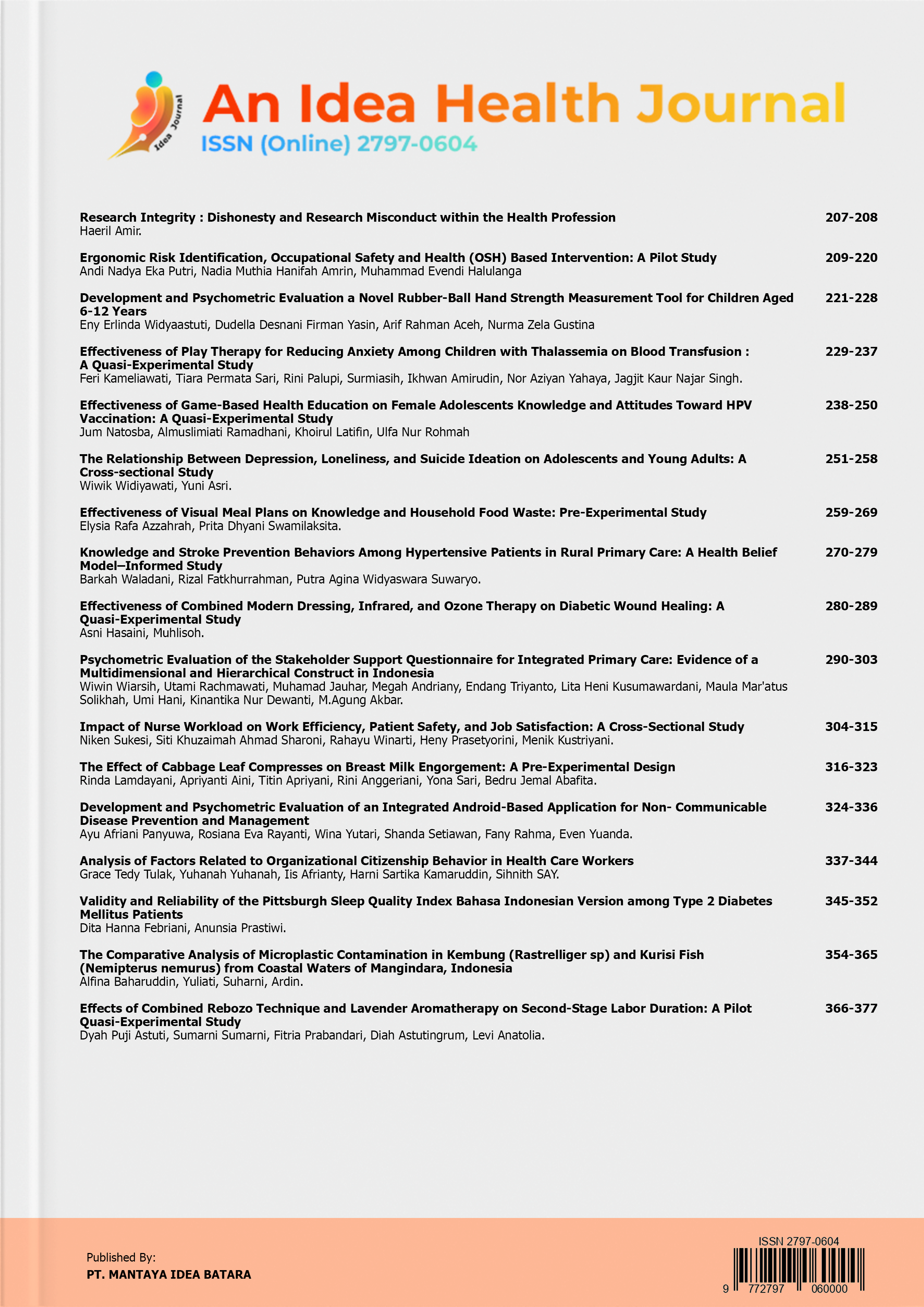
Effectiveness of Play Therapy for Reducing Anxiety Among Children with Thalassemia on Blood Transfusion : A Quasi-Experimental Study
DOI:
https://doi.org/10.53690/ihj.v6i02.656Keywords:
Anxiety, Children, ThalassemiaAbstract
Background: Children with thalassemia require lifelong, repeated blood transfusions, which frequently induce anxiety due to invasive procedures and unfamiliar clinical settings. If left unaddressed, anxiety can compromise treatment adherence and adversely impact psychological well-being. The present study investigates the effectiveness of play therapy in reducing anxiety among children with thalassemia undergoing blood transfusion.
Methods: A quasi-experimental one-group pretest–posttest design was used at Pringsewu Regional Hospital. A total of 26 children were recruited using a total sampling approach. The intervention consisted of coloring-based play therapy administered for 20–30 minutes prior to transfusion. Anxiety levels were measured using a standardized child anxiety questionnaire before and after the intervention. Data were analyzed using the Wilcoxon Signed Rank Test.
Result: Anxiety levels dropped significantly after the intervention. The median (IQR) anxiety score went from 40.42 before play therapy to 15.65 after. The difference between pretest and posttest scores was statistically significant (p < 0.001). Play therapy reduced anxiety in the participants.
Conclusion: Play therapy is an effective non-pharmacological intervention for reducing anxiety in children with thalassemia undergoing blood transfusion. Its implementation may support pediatric nursing care by improving emotional comfort and facilitating smoother treatment procedures.
Downloads
Downloads
Published
How to Cite
Issue
Section
Citation Check
License
Copyright (c) 2026 An Idea Health Journal

This work is licensed under a Creative Commons Attribution 4.0 International License.